Ethernet switches: the backbone of any professional network
A switch is the device that connects all elements of a local network to each other: servers, WiFi access points, IP cameras, computers, VoIP phones, automation systems. Choosing the right switch is not just a matter of port count: the management level, PoE power budget, uplink speed and the role it plays in the network architecture determine the performance and scalability of the entire installation.
L2, L2+ and L3: the management level you need
Switches are classified by their network management capability, and this classification defines what they can do beyond simply connecting devices.
An L2 (layer 2) switch works with MAC addresses and manages traffic within the same local network. It allows VLANs to be created to segment traffic, trunks to be configured between switches, and basic QoS to be applied to prioritise VoIP or camera traffic. It is the right choice for the vast majority of installations: offices, hotels, industrial warehouses and WiFi connectivity distribution networks.
An L2+ (advanced layer 2) switch adds static routing between VLANs without a dedicated router, simplifying architecture in mid-size installations. An L3 (layer 3) switch incorporates full dynamic routing via protocols such as OSPF or BGP, ideal for complex networks, data centres and environments where redundancy and intelligent routing are critical.
PoE: power and data through a single cable
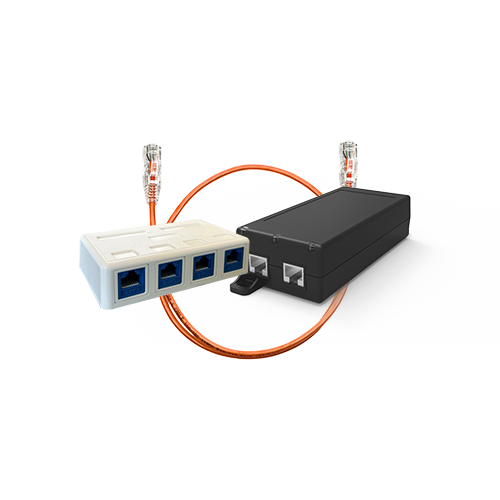
Power over Ethernet (PoE) allows electrical power to be supplied through the same network cable that carries data. The result is a cleaner, more flexible and more cost-effective installation: WiFi access points, IP cameras and VoIP phones are powered directly from the switch, with no need for additional sockets or power adapters near each device.
The PoE+ (IEEE 802.3at) standard supplies up to 30W per port, sufficient for the vast majority of WiFi 6 APs, cameras and IP phones. The PoE++ (IEEE 802.3bt) standard reaches 90W per port, required for high-performance WiFi 6E APs, digital signage or videoconferencing equipment. The total switch power budget is as important as the per-port power: a 24-port PoE+ switch with a 370W budget can simultaneously power up to 12 APs at 30W each.
Access switches: the Air, Wave and Nexus ranges
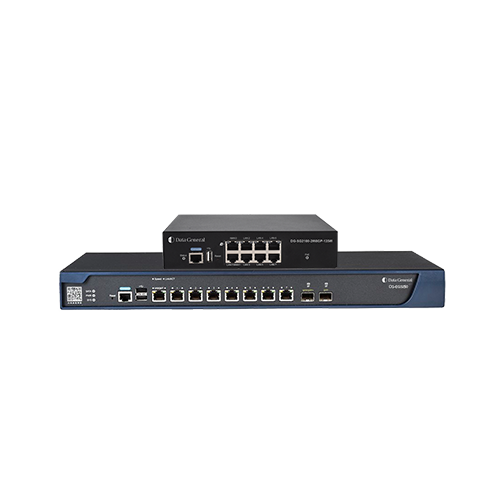
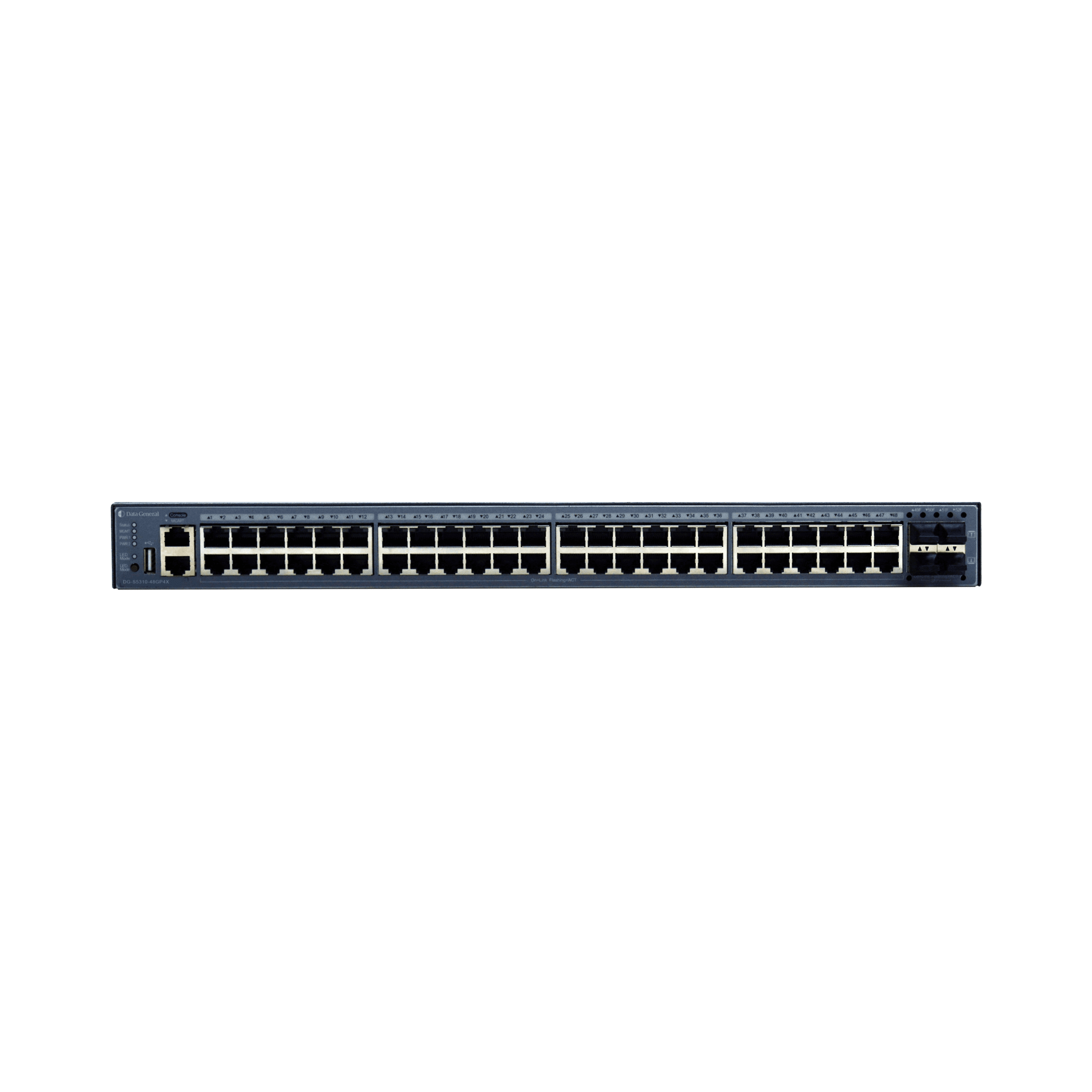
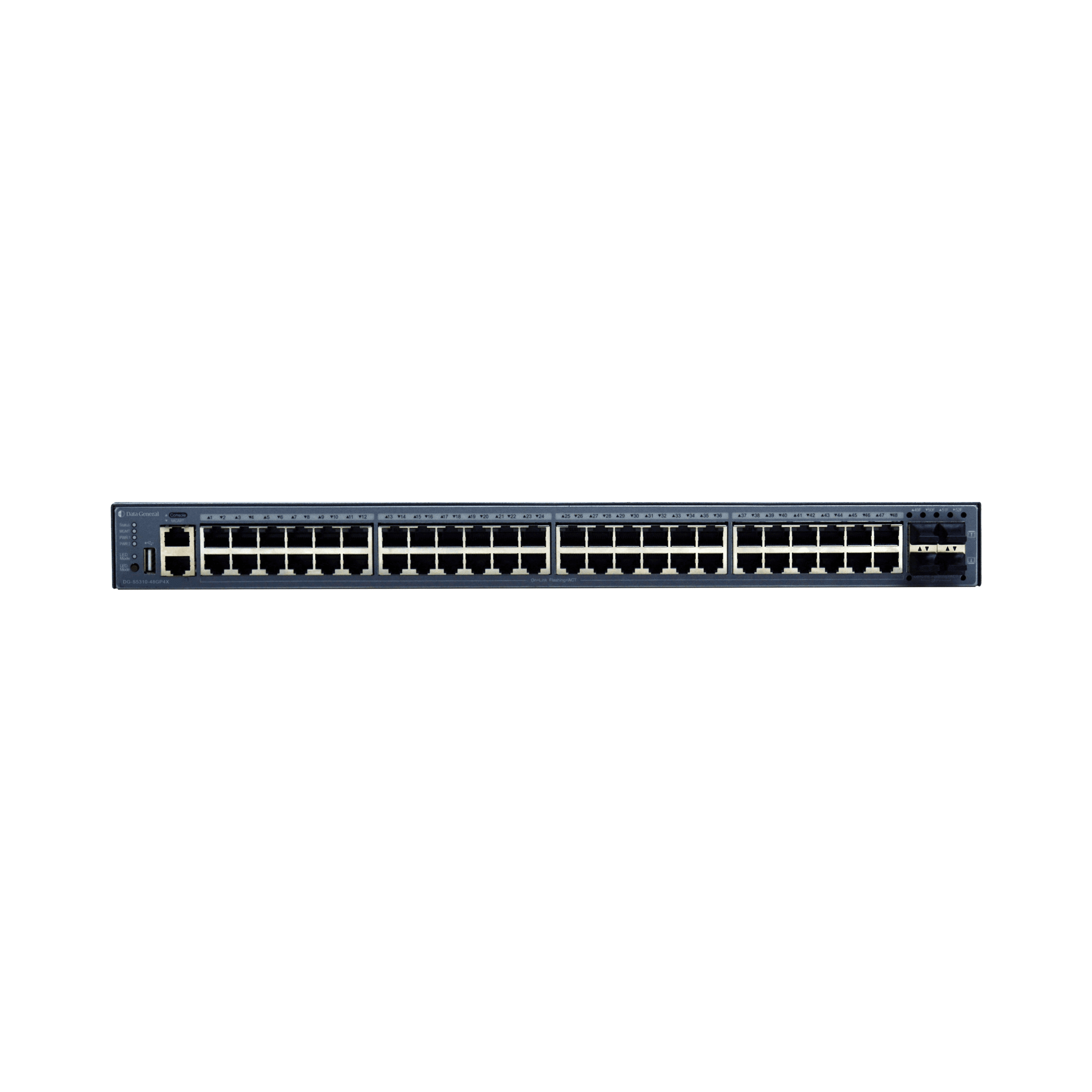
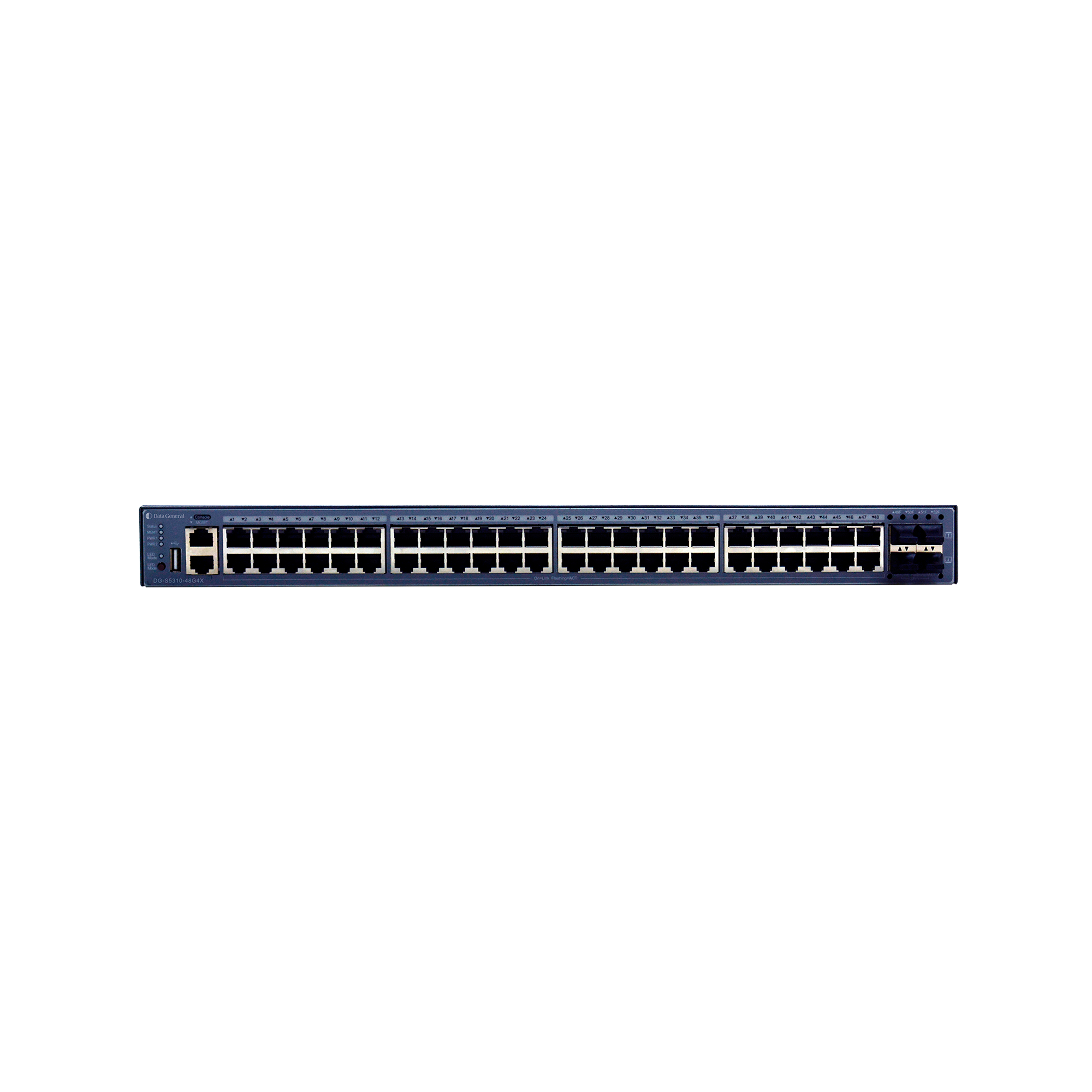
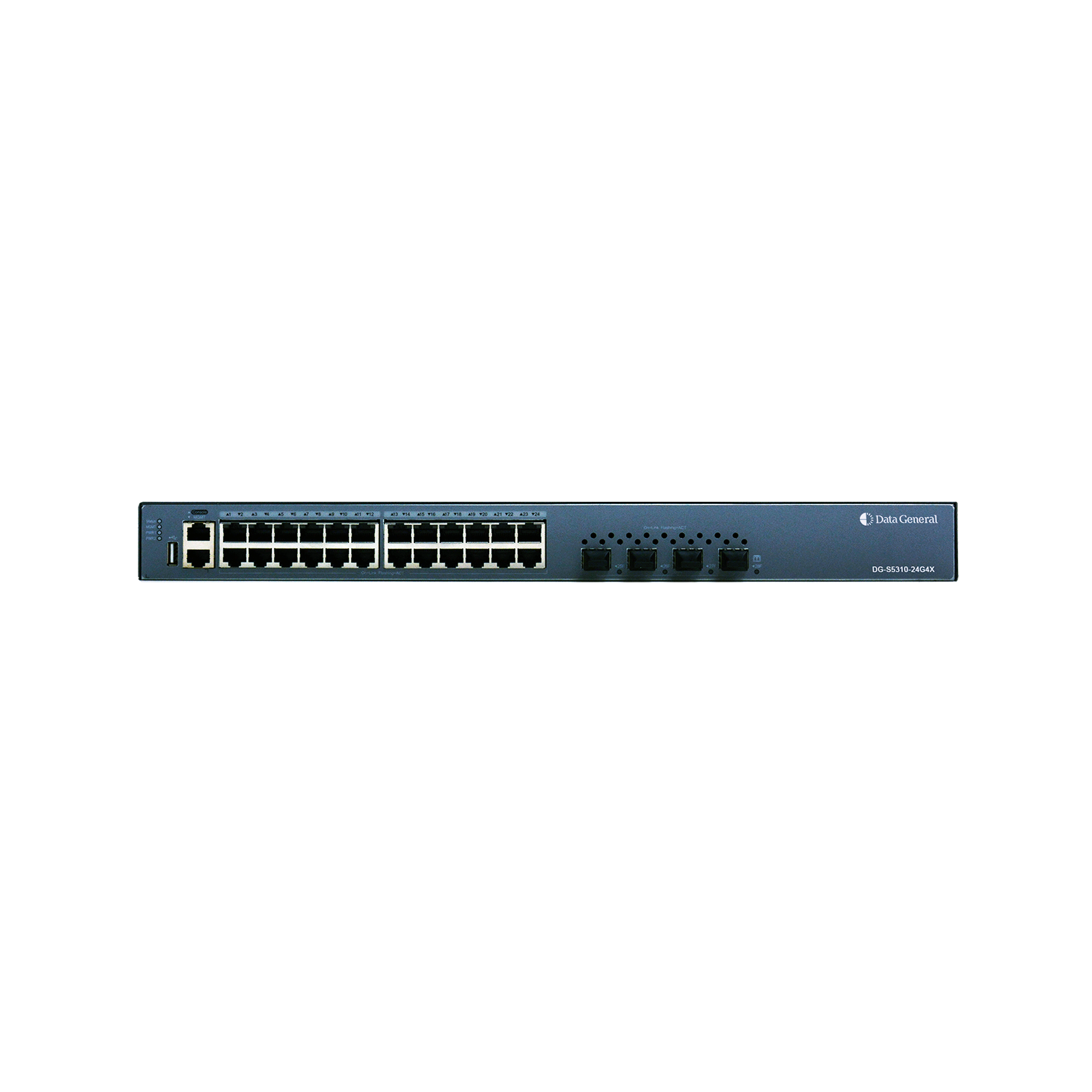
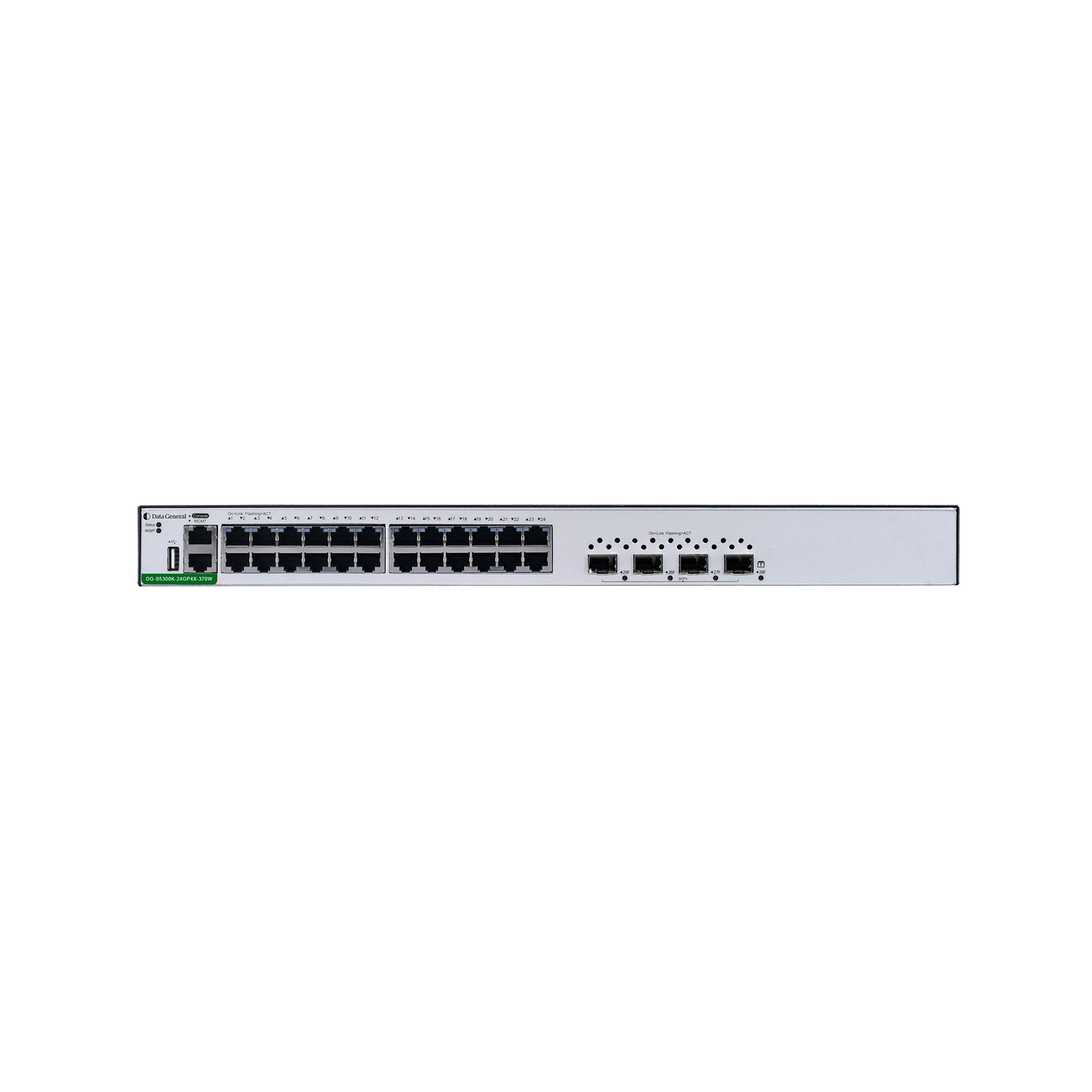
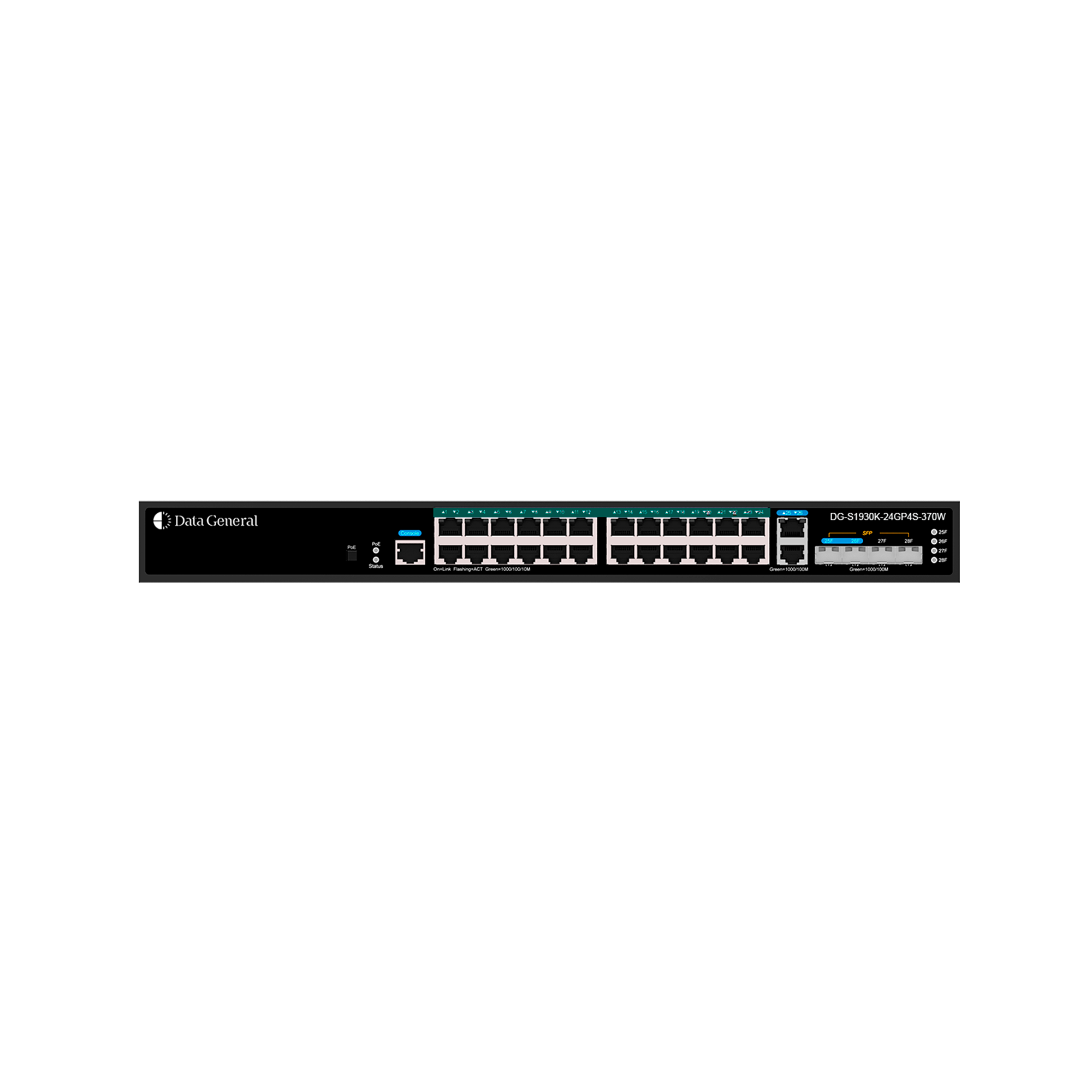
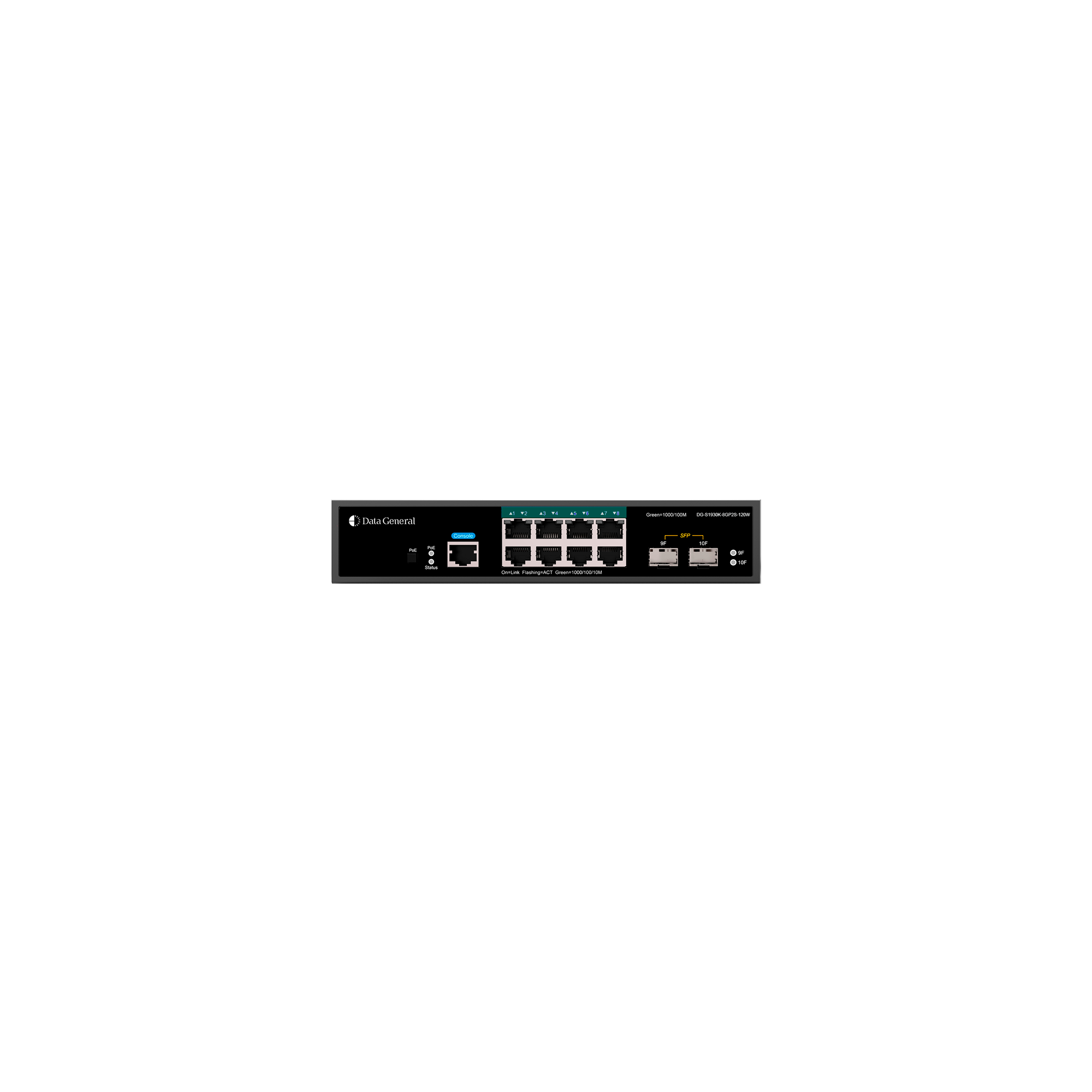
Access switches connect end devices directly to the network. The Air range includes the DG-S1930K in 8 and 24-port Gigabit PoE versions with SFP uplinks, and the DG-S5300K-24GP4X with 10G RJ45 ports for installations demanding higher bandwidth to devices.
The Wave range extends the offer with the DGW-SG-7082SP, 7162SP and 7242SP models — Gigabit PoE+ switches in 8, 16 and 24-port versions designed for environments combining WiFi 7 APs with existing devices.
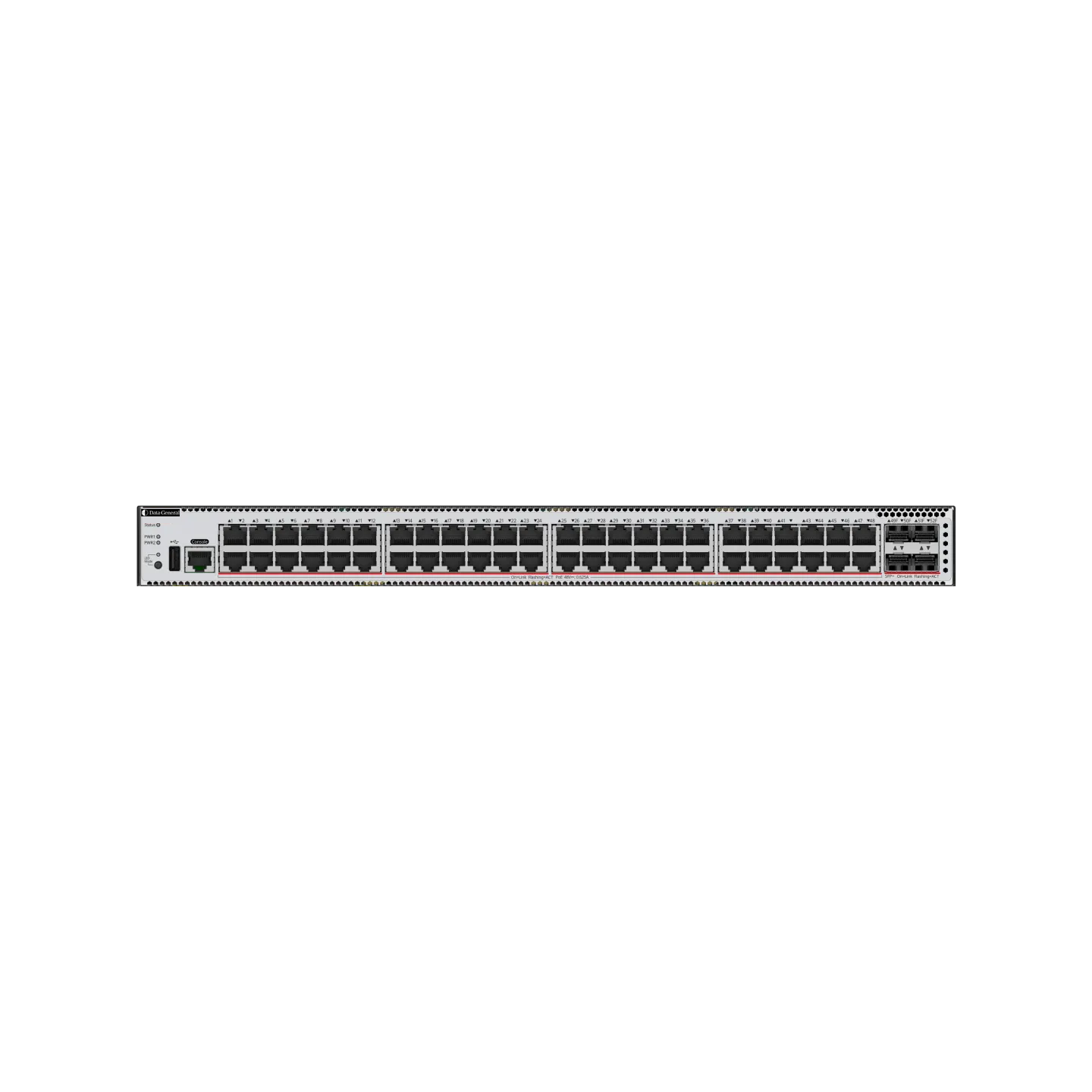
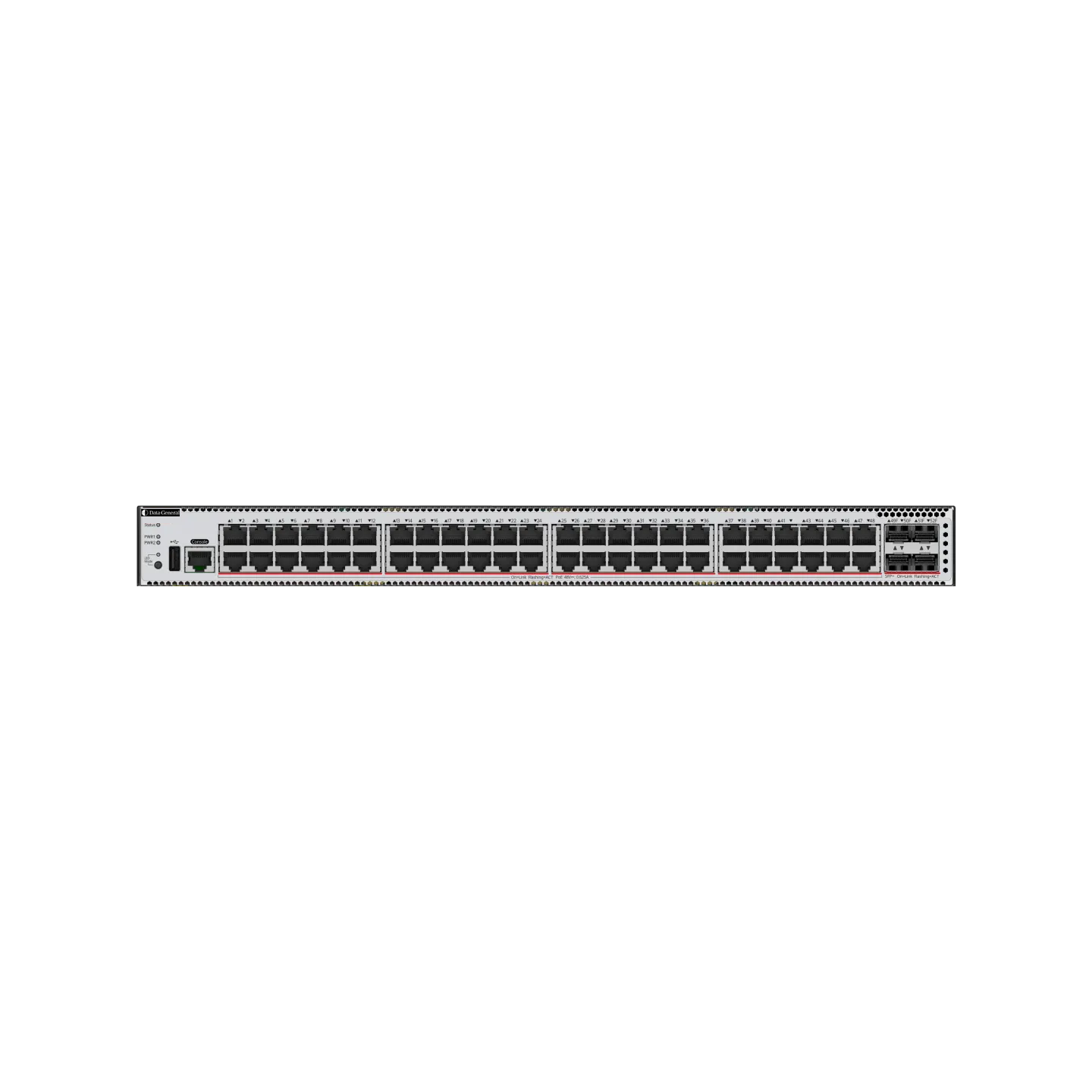
The Nexus range offers the broadest choice: from the fanless DGN-SP08G2S for silent installations to the DGN-SP48G6X with 48 10G RJ45 ports and a 760W PoE+ budget, including the DGN-SP08M4X and DGN-SP24M6X models with 2.5G RJ45 ports and PoE++ for high-density, high-power environments.
Core and aggregation switches: the backbone of the network
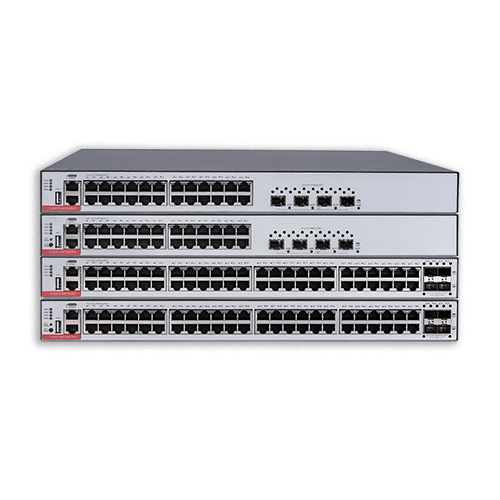
In larger installations, access switches connect to an aggregation or core switch that centralises traffic and routes it outward or toward servers. This layer provides the high-speed uplinks needed to avoid bottlenecks when dozens of access switches converge at a single point.
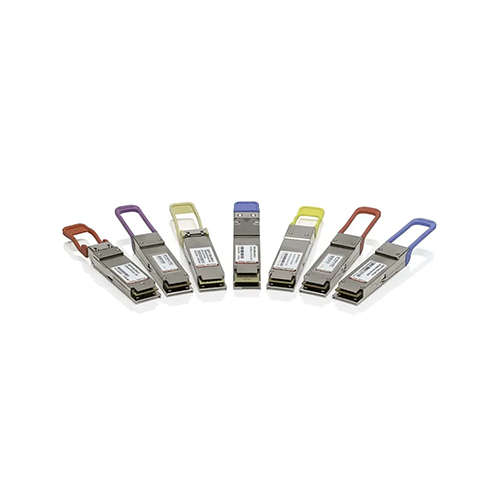
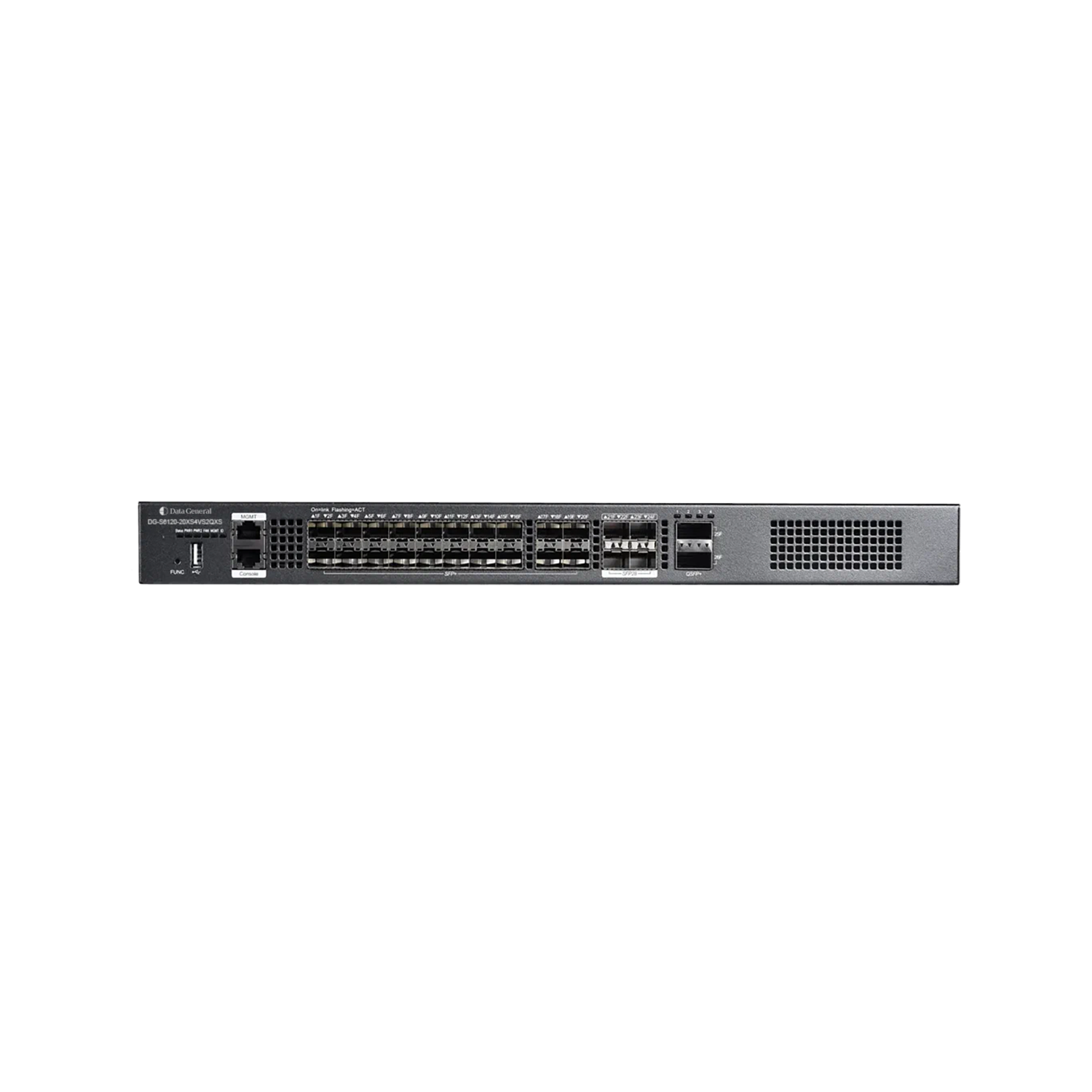
Data General’s DGN-SC models are designed for this role. The DGN-SC2G10X-2F and DGN-SC8G12X-2F combine Gigabit RJ45 ports with 10G SFP+ uplinks and dual redundant power supplies. The DGN-SC24X2C-2F scales to 24 10G SFP+ ports with 100G QSFP28 uplinks, and the DGN-SC16X8Y4C-2F adds 25G SFP28 ports for high-performance environments. Dual power supply is standard across the entire core range — an essential requirement in critical infrastructures where any interruption has operational impact.
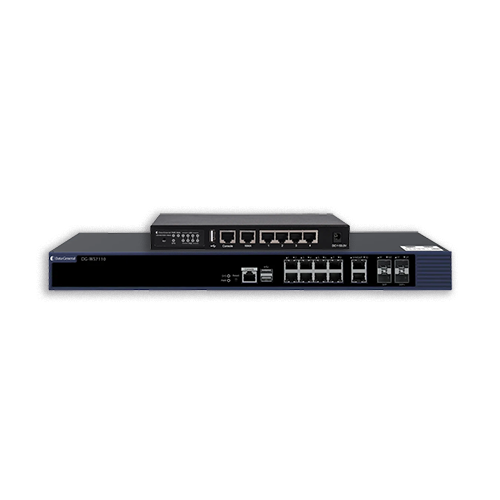
All Data General switches across the Air, Wave and Nexus ranges are fully compatible with the WIS cloud management platform, providing unified visibility of switches, access points and gateways from a single dashboard — a complete picture of the entire network infrastructure in real time.