Transceivers and fibre optic: high-speed connectivity without distance limits
In professional networks, fibre optic is the preferred transmission medium for high-speed connections between switches, servers and core equipment. Unlike copper, fibre is immune to electromagnetic interference, supports much greater distances and provides the bandwidth required in the most demanding environments. Transceivers, AOC cables and DAC cables are the components that make these connections possible.
What is an SFP transceiver
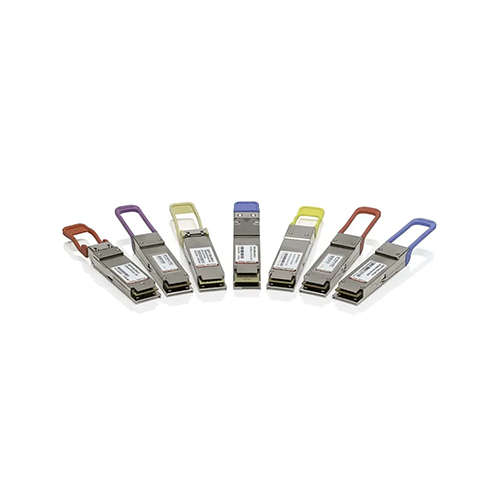
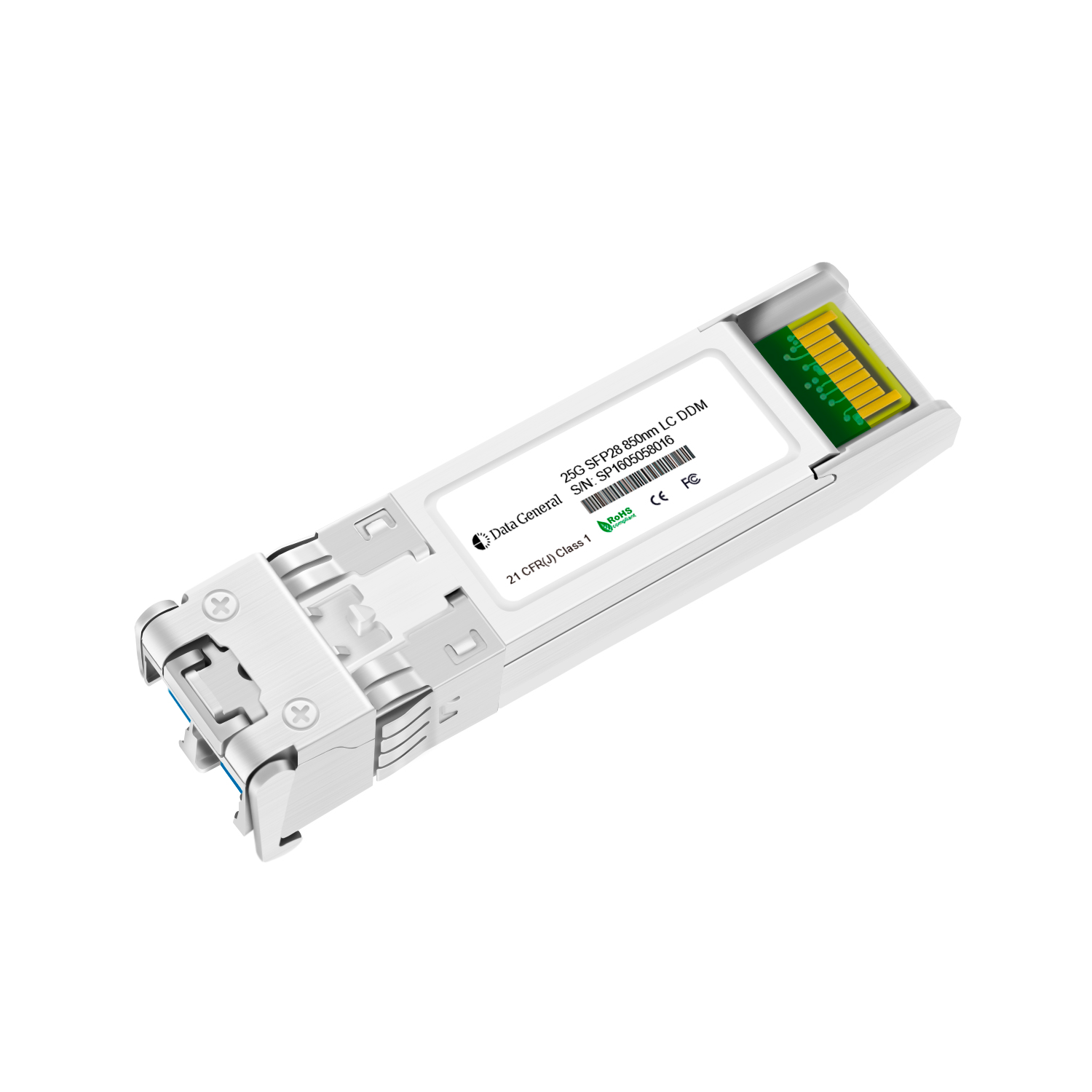
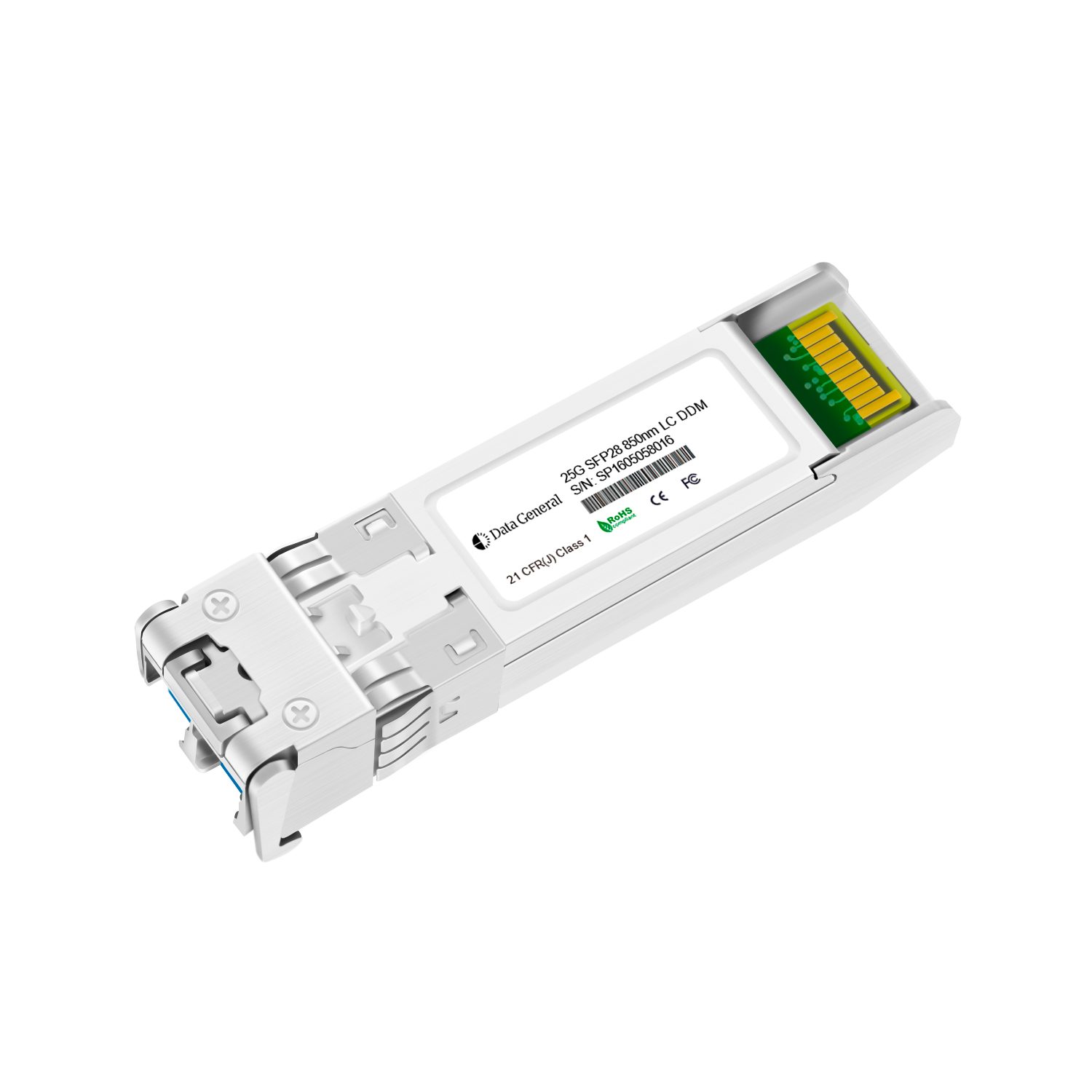
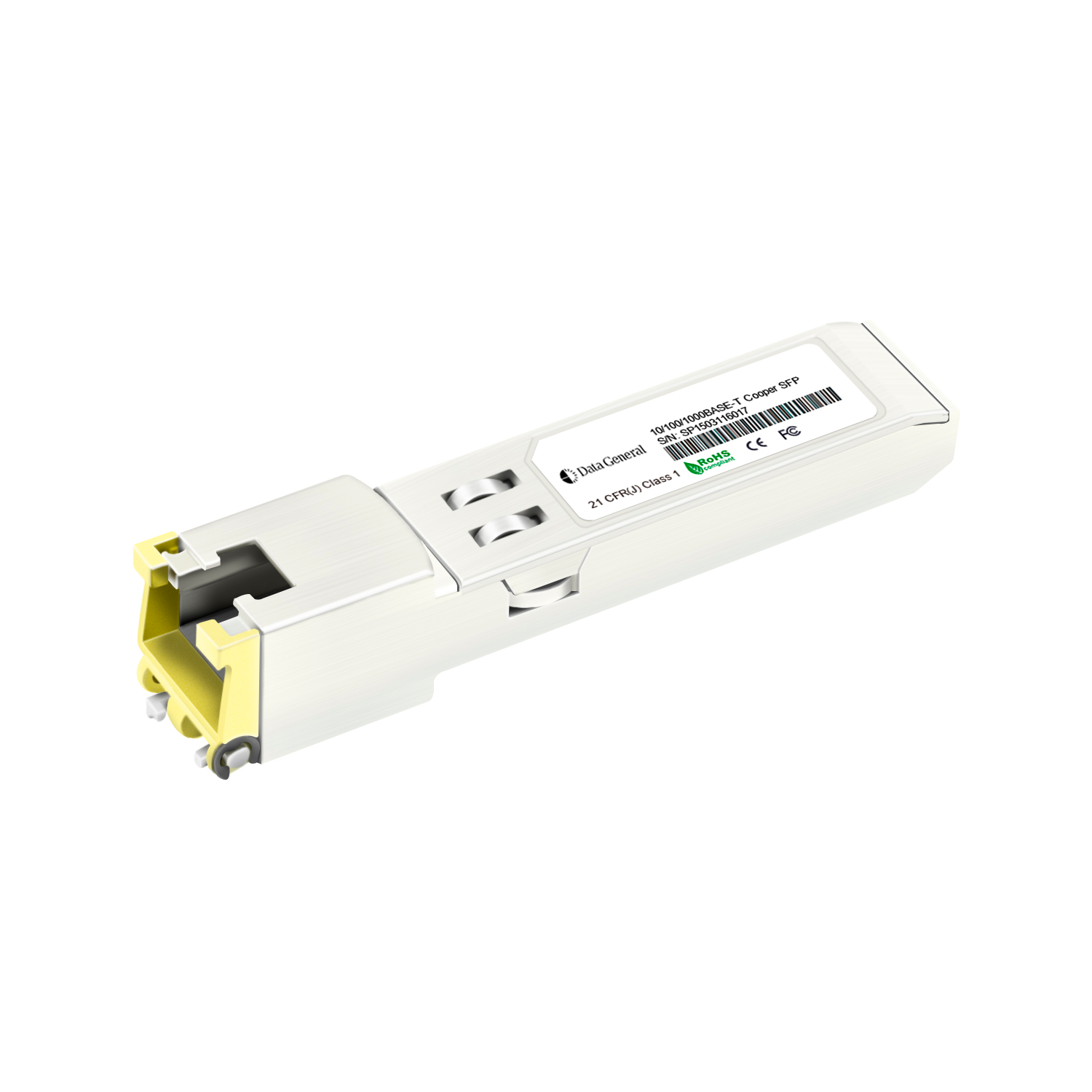
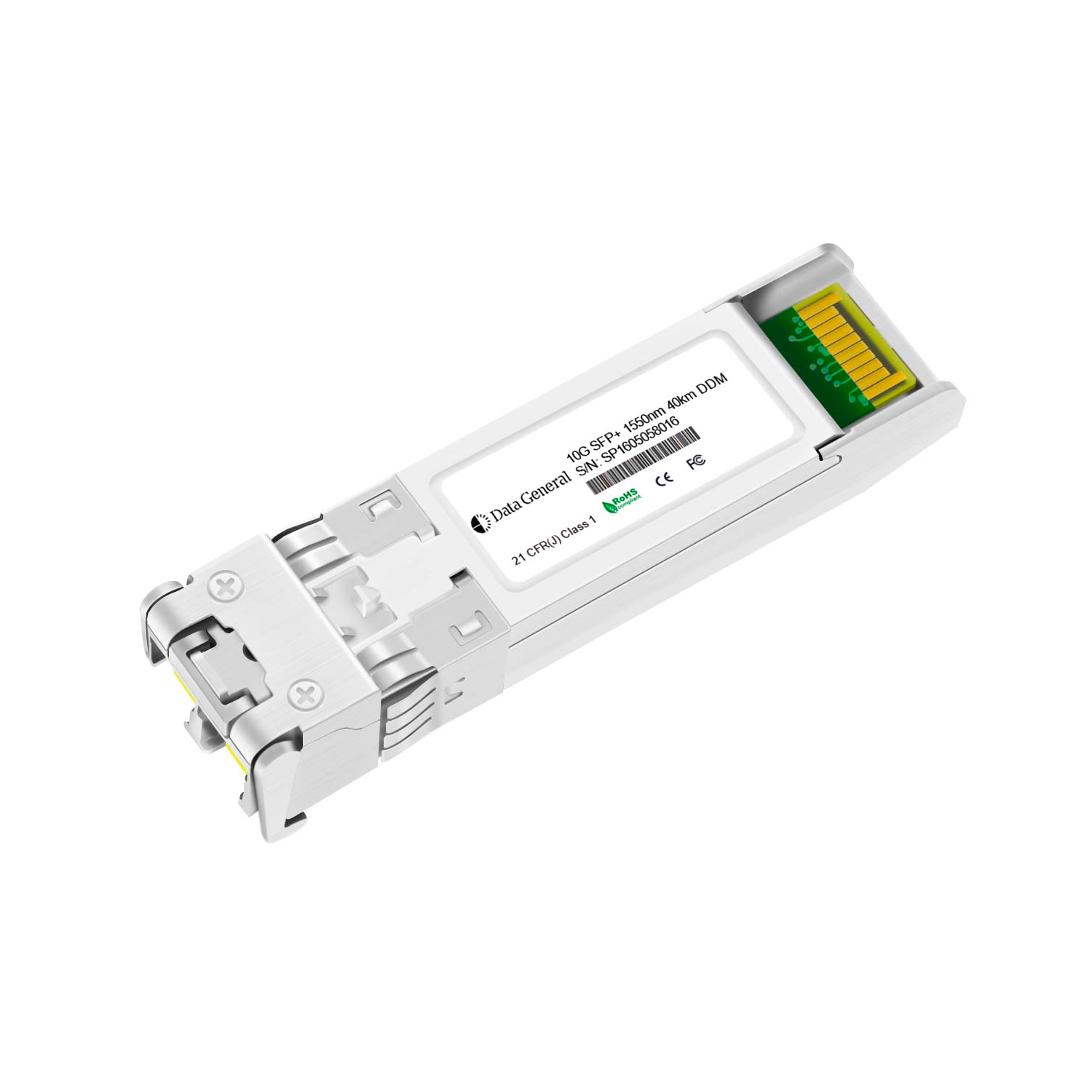
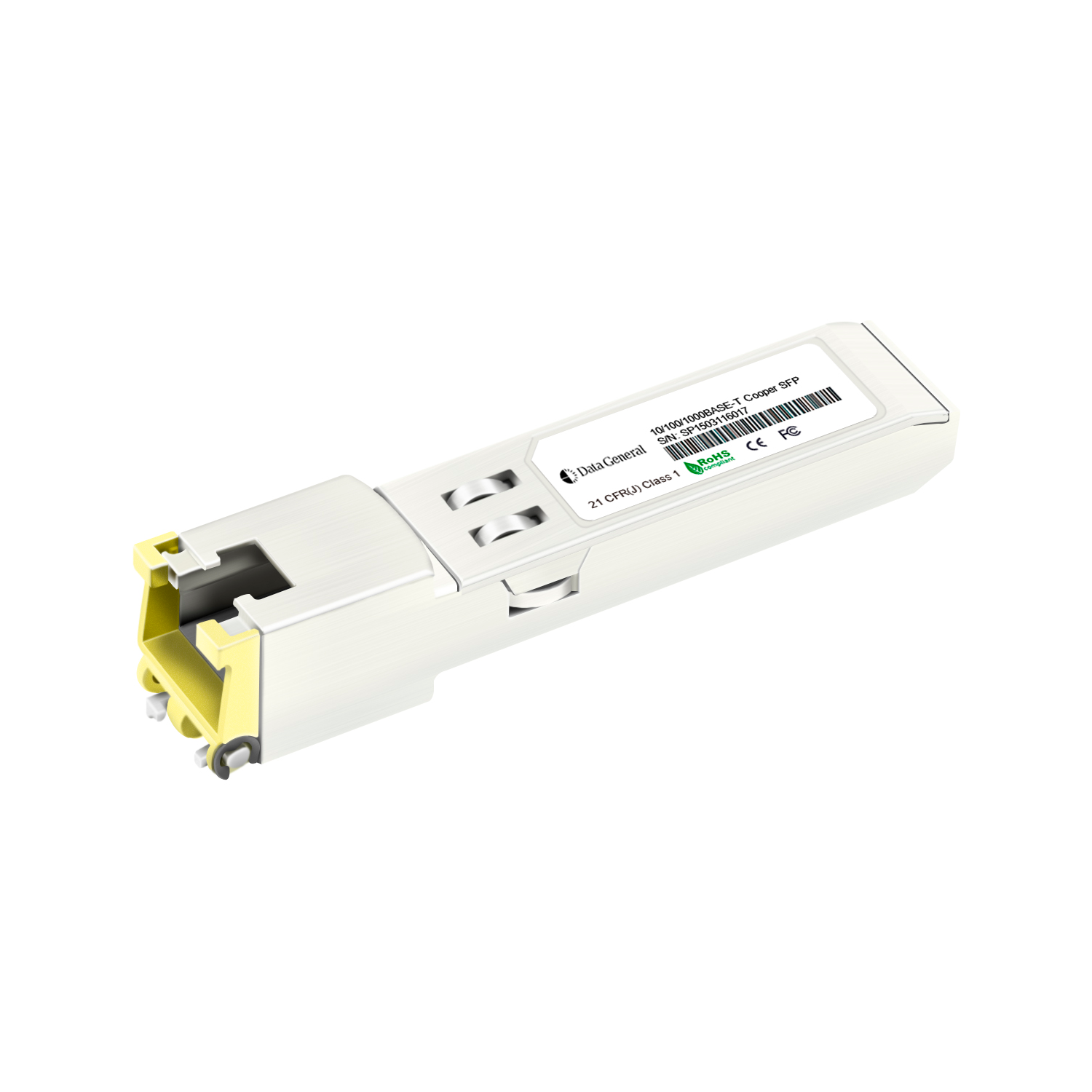
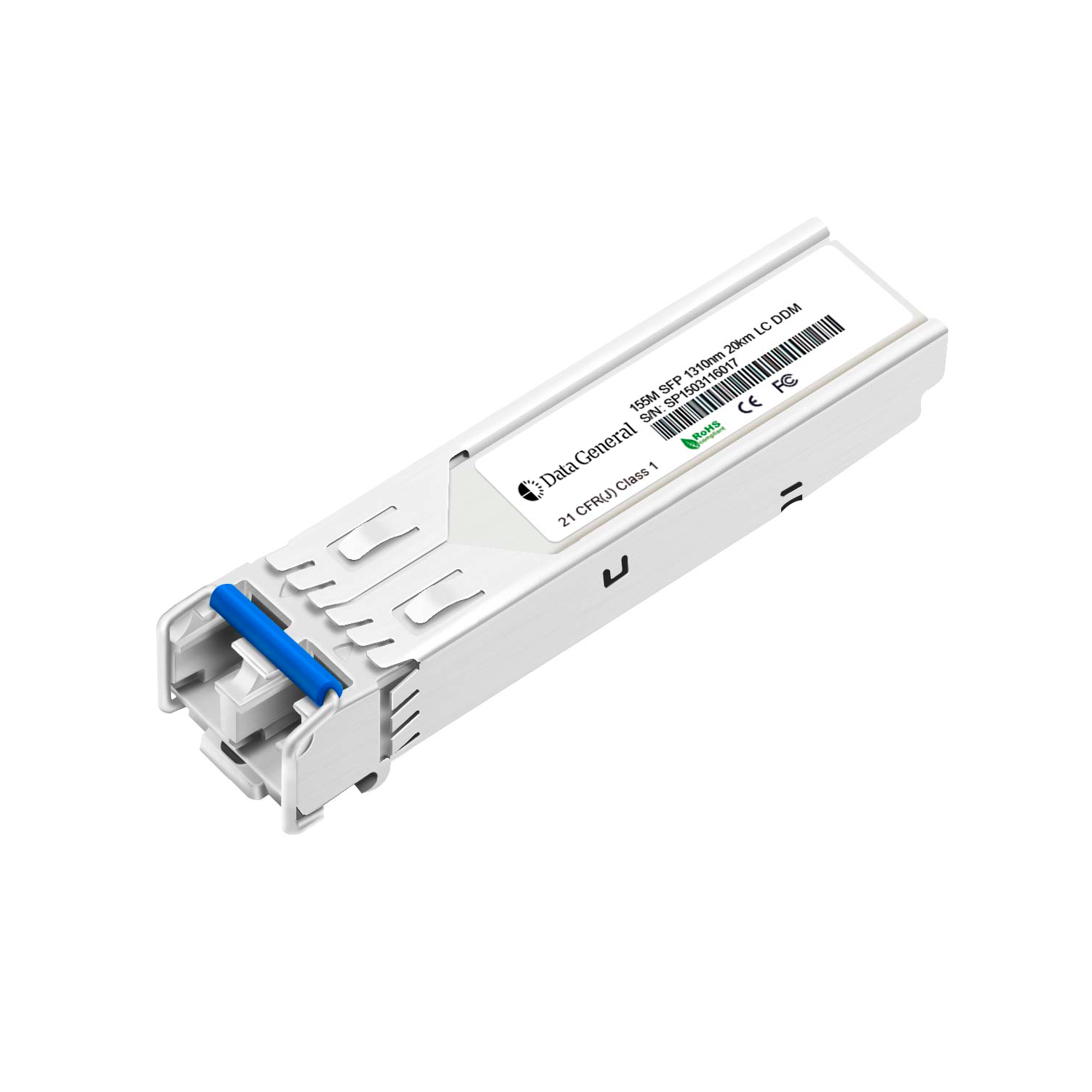
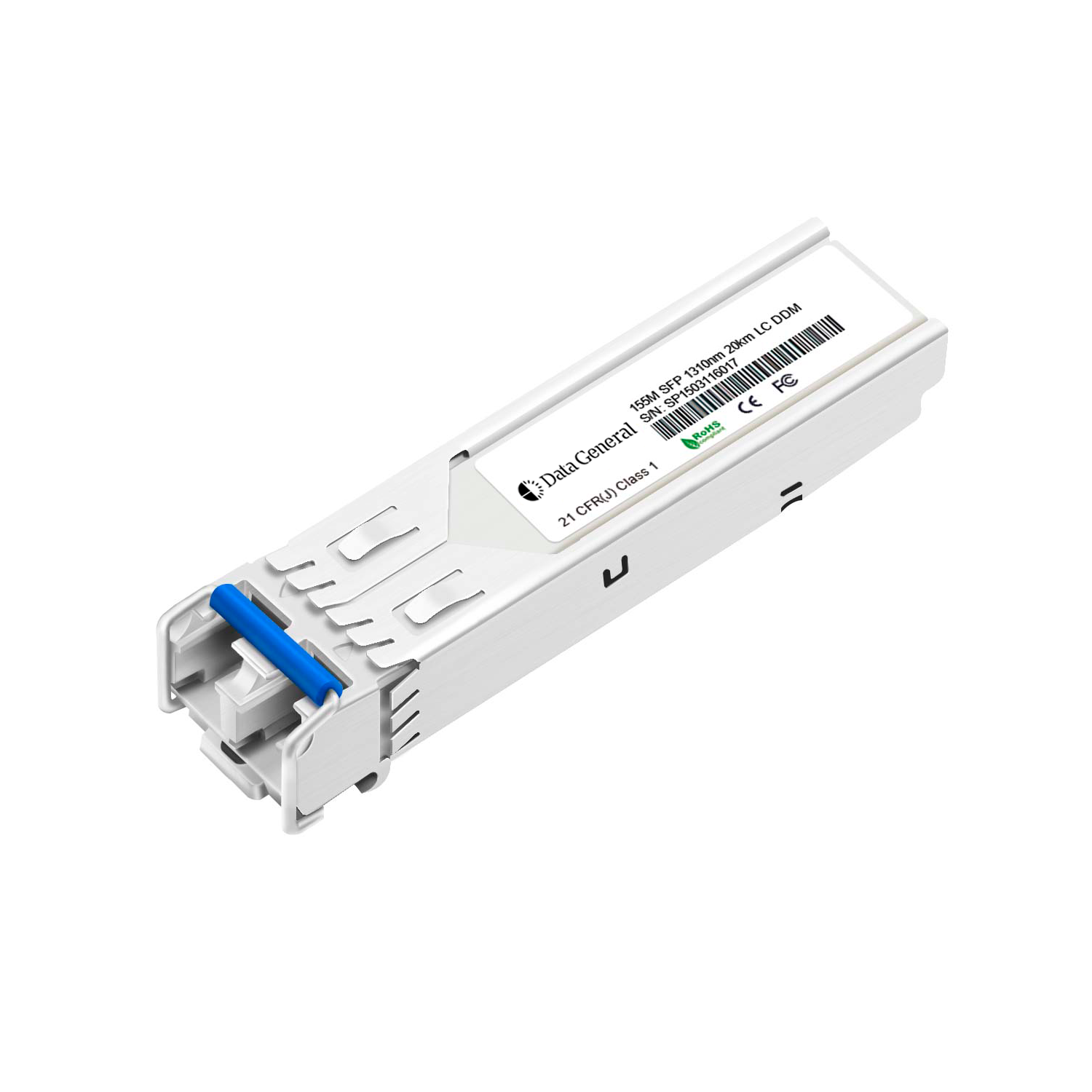
A transceiver is a pluggable module that converts electrical signals into optical signals and vice versa, allowing switches and routers to communicate over fibre optic. The most widely used form factor is the SFP (Small Form-factor Pluggable), which fits a standard slot found in virtually all professional switches and gateways on the market.
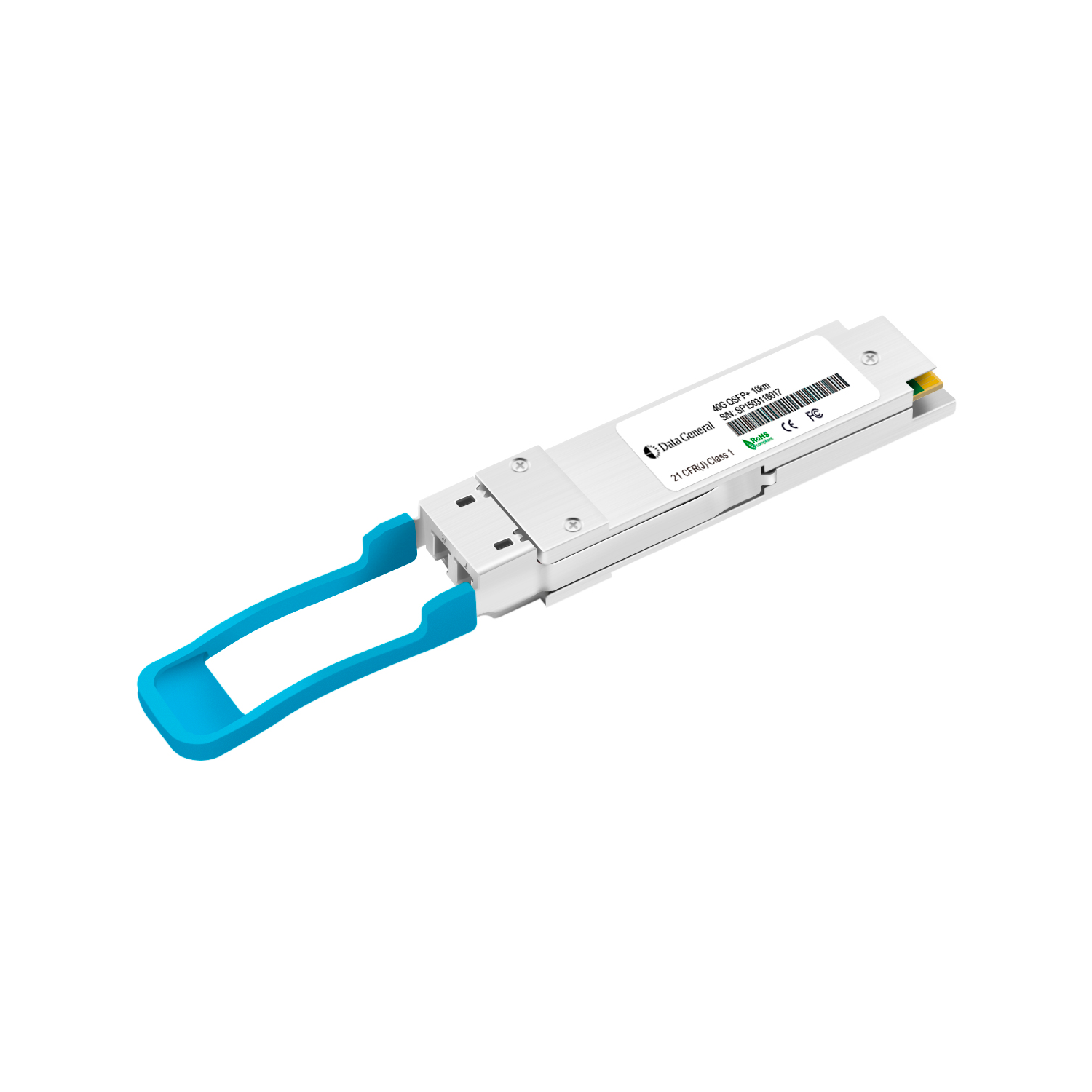
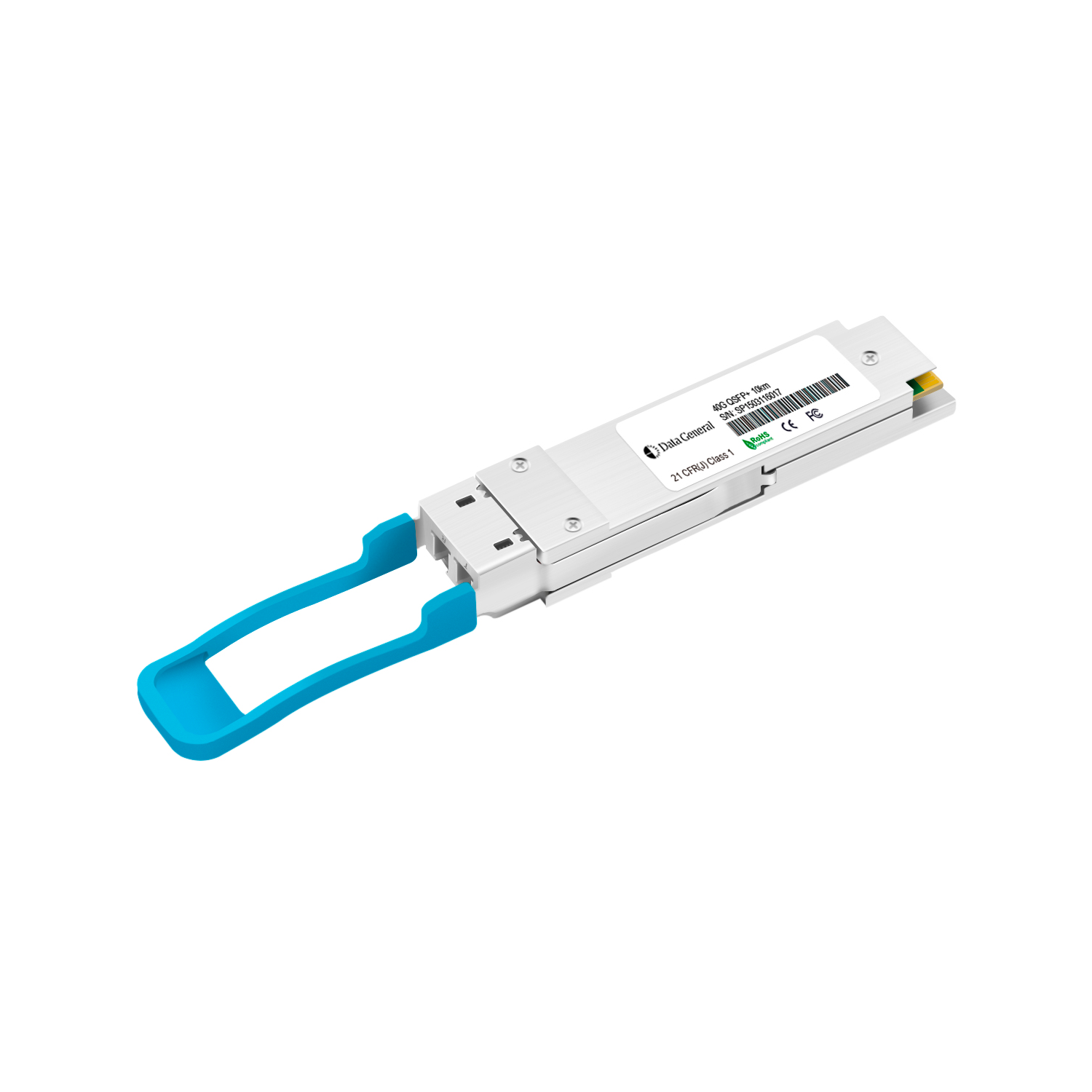
Transceivers are classified primarily by transmission speed and by the type of fibre they use. The Data General range covers all current standards: SFP at 1G, SFP+ at 10G, SFP28 at 25G and QSFP28 at 40G and 100G, with options for both single-mode and multimode fibre in each form factor.
Single-mode and multimode fibre: when to use each
Multimode fibre (OM3, OM4, OM5) uses a larger core diameter that allows multiple modes of light to be transmitted simultaneously. It is more cost-effective and sufficient for short distances: within a building, between racks in the same data centre or between floors. Its typical range is between 100 and 400 metres depending on the standard and speed.
Single-mode fibre (OS1, OS2) uses a very small core diameter that transmits a single mode of light, virtually eliminating signal dispersion. It supports distances of several kilometres with full reliability, making it the standard solution for connections between buildings, campuses, remote sites and any link exceeding 500 metres. Data General single-mode transceivers cover distances of up to 10 km, 40 km and 80 km depending on the model.
Connector types: LC, MPO and SC
The LC (Lucent Connector) is the most common connector in SFP and SFP+ transceivers. Its small size makes it ideal for high-density installations, and it comes in duplex configuration (two fibres: TX and RX) for most applications.
The MPO/MTP connector groups between 8 and 24 fibres in a single connector, used primarily with ribbon fibre cables in high-density installations and with QSFP transceivers requiring multiple fibres for 40G or 100G speeds. The SC connector, larger than the LC, remains present in legacy installations and some long-distance transceivers.
AOC and DAC: alternatives to transceivers with separate fibre
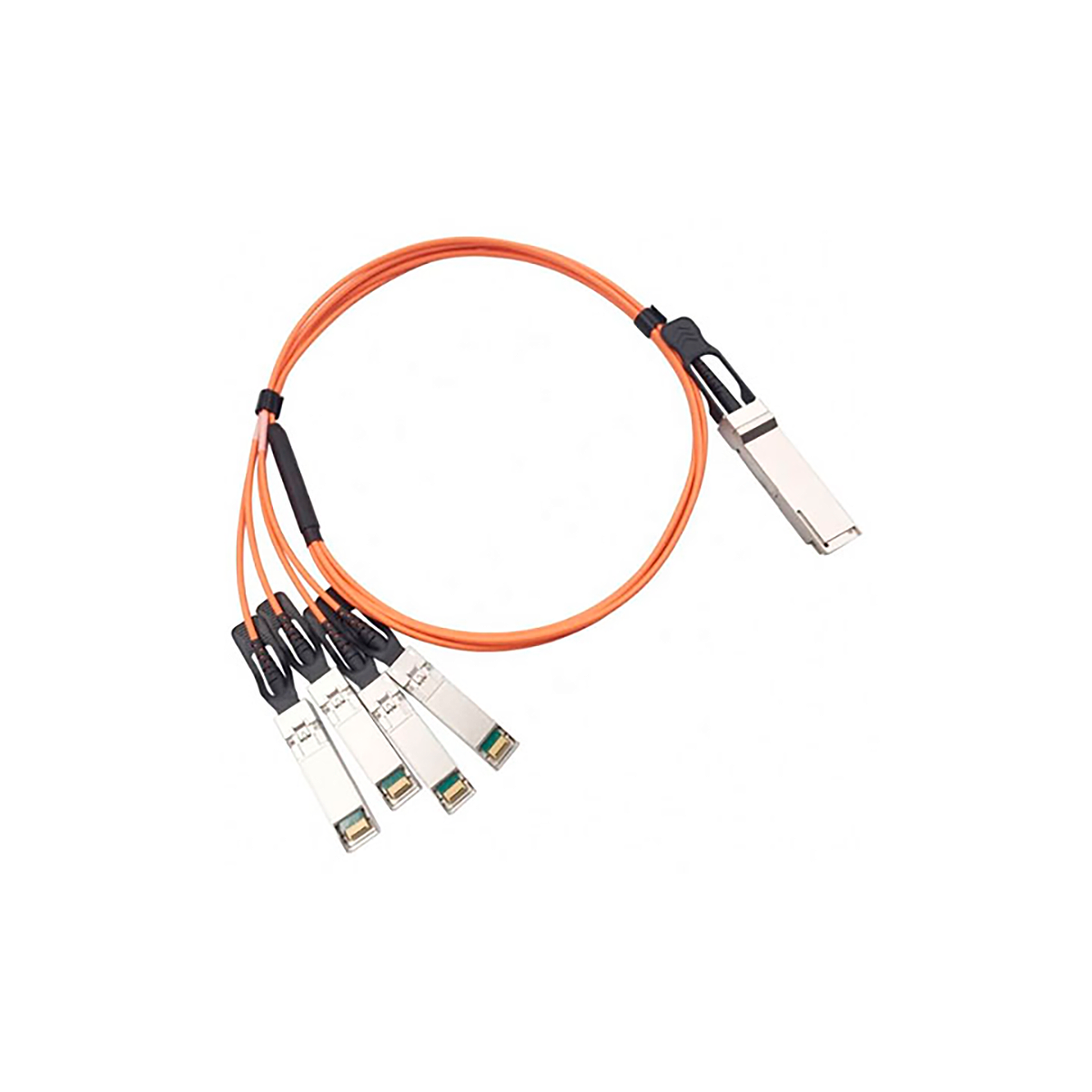
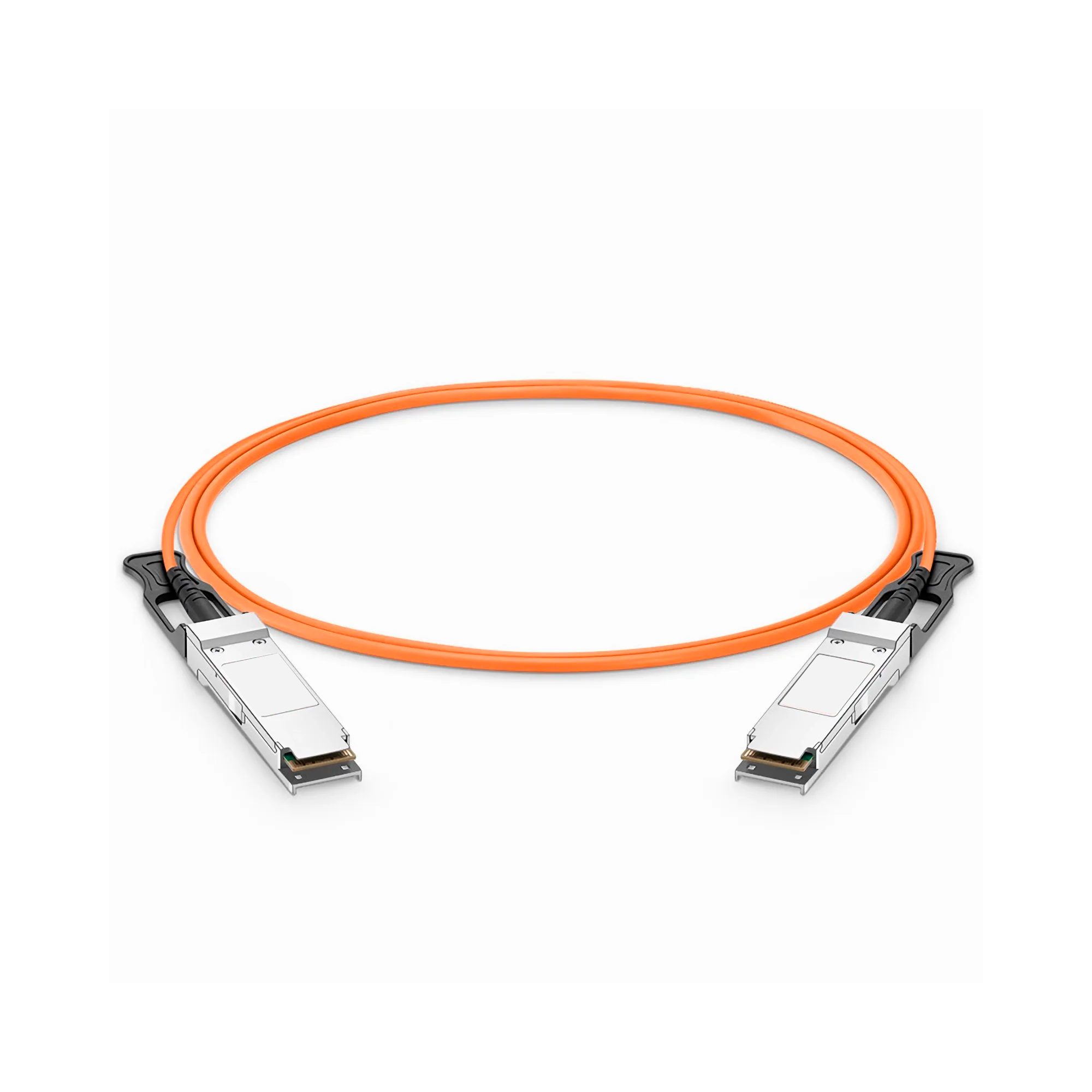
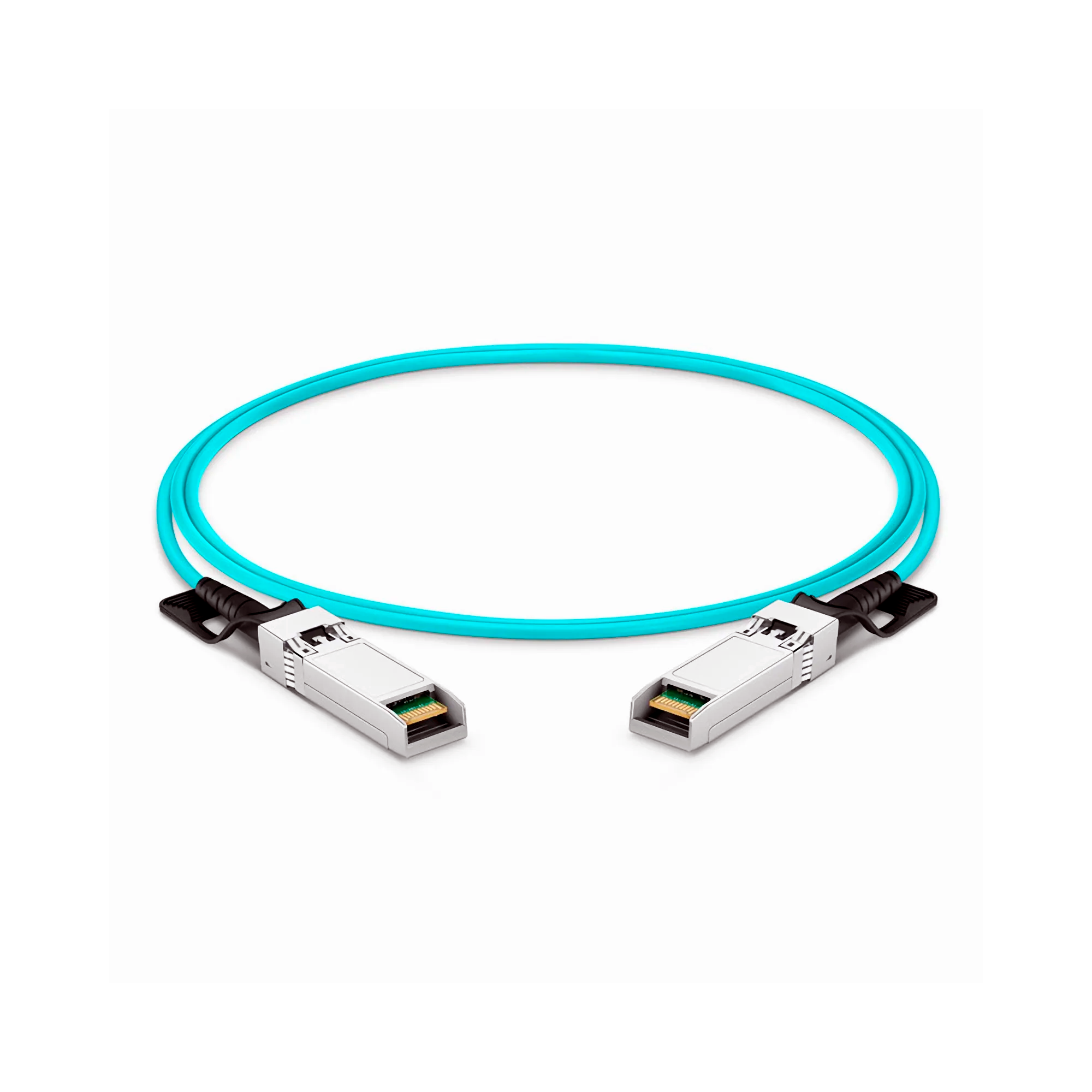
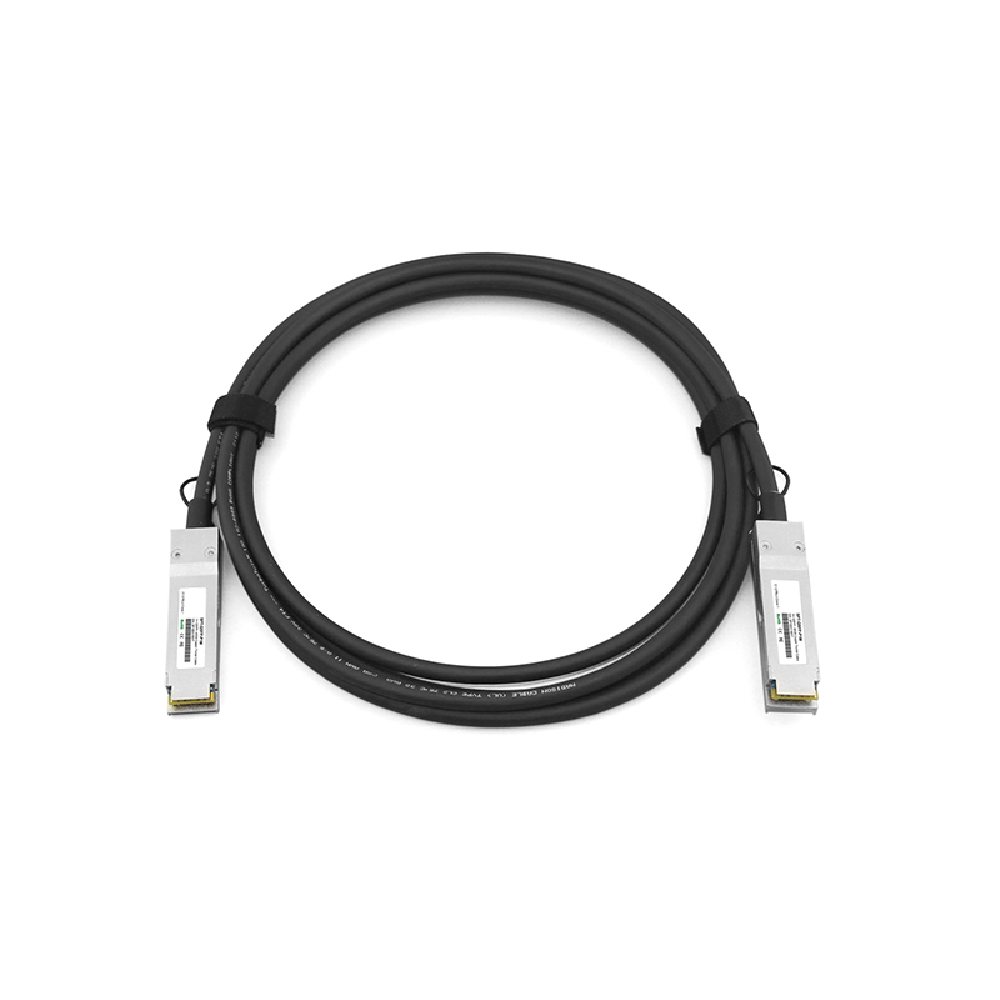
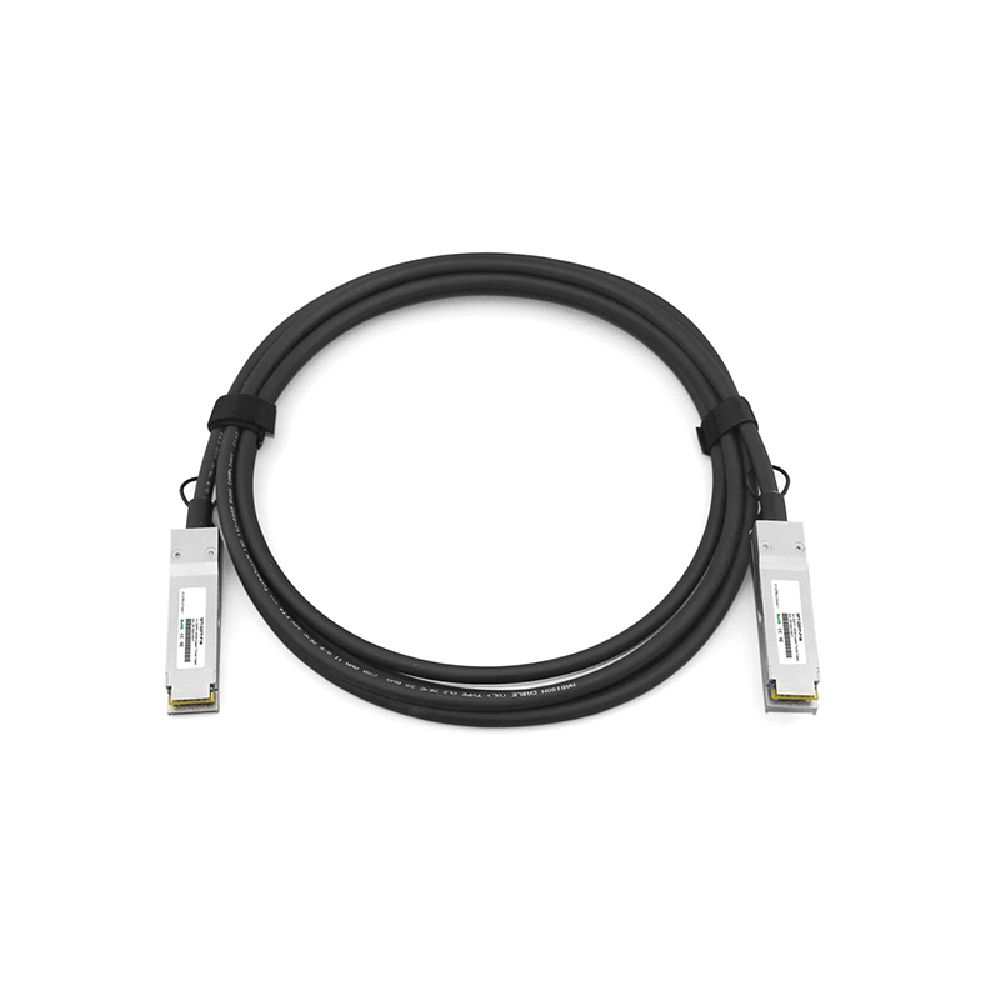
For short-distance connections within a rack or between adjacent racks, AOC (Active Optical Cable) and DAC (Direct Attach Cable) cables offer a more cost-effective alternative to transceivers with separate fibre.
A DAC cable integrates SFP+, QSFP28 or other format connectors directly at each end, without optical conversion, using high-quality copper — the most economical solution for distances of up to 5 metres. An AOC cable performs optical conversion at each end but uses a fibre cable, making it lighter and more flexible, suitable for distances of up to 30 metres within the data centre.
Compatibility with leading manufacturers
Data General SFP, SFP+, SFP28 and QSFP28 modules are designed to be compatible with equipment from the leading manufacturers on the market, including Cisco, Ubiquiti, Mikrotik, Ruijie, TP-Link, HPE, Juniper and Huawei. This compatibility allows original branded modules to be replaced at significantly lower cost without compromising link performance or reliability.